
Bookkeeping vs Accounting for Chicago Business Owners
If you own a business in Chicago, you’ve probably asked this without realizing it’s even a question. Do I need a bookkeeper? Or is this something my accountant already handles?
For many owners searching bookkeeping vs accounting Chicago, the confusion usually comes down to who does what and when.
Most people don’t think about the difference until something breaks. A tax bill feels higher than expected. Reports don’t match what’s in the bank. Or you sit down to look at your numbers and realize you don’t really trust them.
Bookkeeping and accounting are connected, but they are not interchangeable. Knowing which one does what matters more than most owners think. And knowing the difference will also help in deciding to pick the right bookkeeper in Chicago to outsource your work to.
Why This Question Comes Up So Often in Chicago
Chicago businesses tend to wear a lot of hats. Owners run operations, manage clients, handle payroll, and somewhere along the way, the books get pushed to the side. Not ignored. Just postponed.
At first, that works.
Then a few months pass. Transactions pile up. Accounts stop matching. And suddenly the question isn’t “bookkeeping vs accounting” anymore, it’s “how did this get so confusing so fast?”
That’s usually when people reach out.
Bookkeeping vs Accounting: The Practical Difference
Here’s the real-world version.
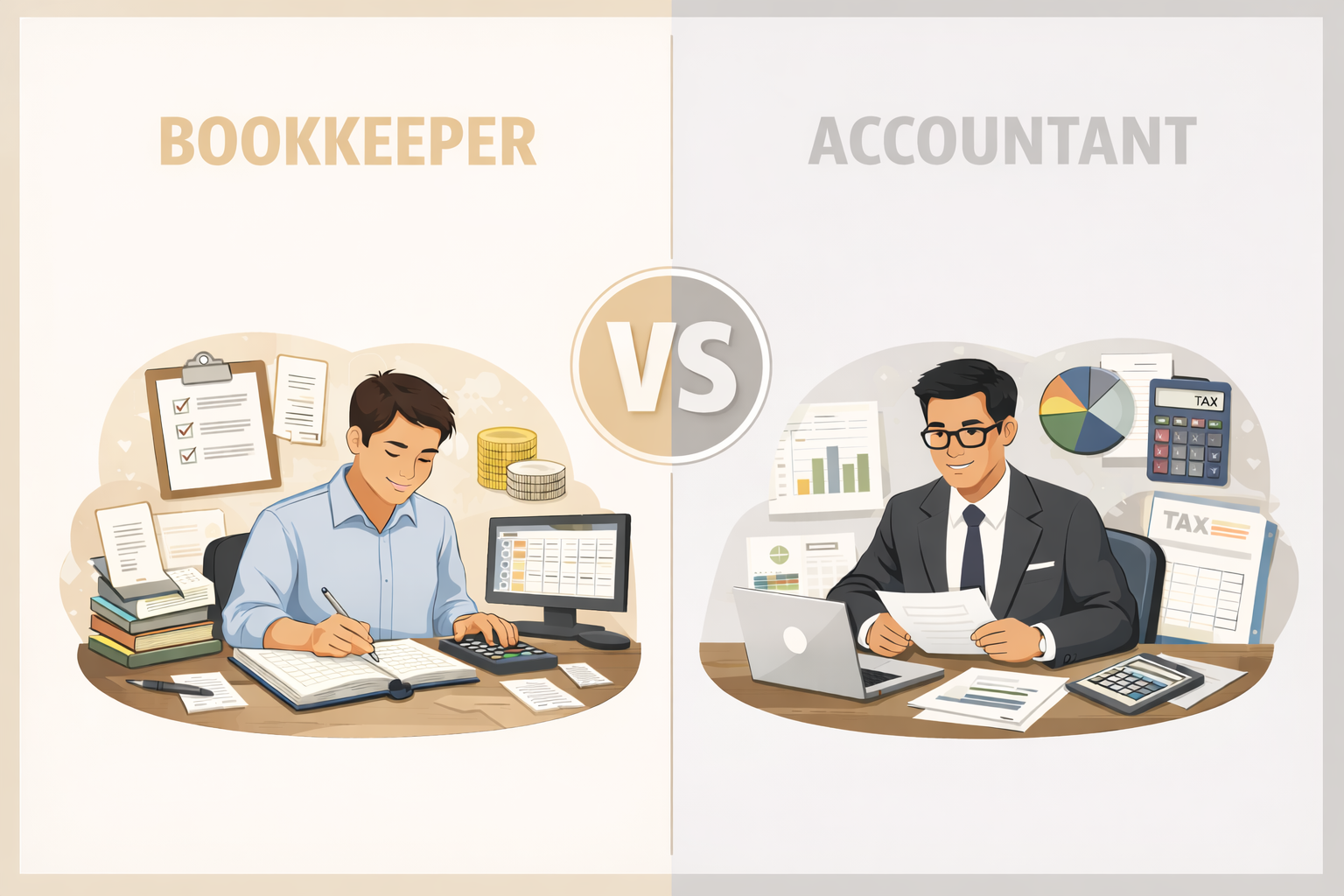
Bookkeeping answers: “What happened this month?”
Accounting answers: “What does that mean for taxes and the business overall?”
Bookkeeping happens continuously. Accounting happens periodically.
One doesn’t replace the other. And when bookkeeping is skipped, accounting ends up doing damage control instead of planning.
What Bookkeeping Actually Covers
Bookkeeping is the ongoing work of keeping your financial records honest.
When you hire someone to provide bookkeeping services in Chicago, it includes some of the following tasks. It’s logging income as it comes in. It’s making sure expenses land where they belong. It’s checking that bank and credit card balances actually match what the software says.
Nothing fancy. Just consistent. When bookkeeping is done regularly, you don’t have to guess where the money went. You can pull a report and trust it. That’s the whole point.
Most Chicago businesses that come to us don’t need complex systems. They need someone paying attention every month.
What Accounting Does (And What It Doesn’t)
Accounting sits a level above bookkeeping.
Accountants review the numbers. They prepare tax filings for the IRS. They help with tax planning and compliance. Some offer advice on structure or strategy, especially as a business grows.
What accountants usually don’t do is track day-to-day activity. They expect the books to already be clean.
If bookkeeping is shaky, accounting work becomes slower, more expensive, and less accurate. That’s not a knock on accountants. It’s just how the workflow actually works.
Which One Your Chicago Business Needs Right Now
If you’re early in business, bookkeeping sets the tone. Clean habits early save a lot of cleanup later.
If you run a service business with steady income, monthly bookkeeping keeps things predictable. You know where you stand without digging.
If you’re growing, hiring, or taking on larger contracts, clean books stop being optional. Decisions based on estimates stop working at that stage.
Most Chicago businesses eventually need both bookkeeping and accounting. The order matters. Bookkeeping usually comes first.
Why Bookkeeping Should Happen Before Accounting
This is where a lot of frustration comes from.
Accountants work off the data they’re given. If the books are incomplete or inconsistent, they either have to fix them or work around them. Both cost money.
When bookkeeping is current, accounting becomes straightforward. Tax prep is cleaner. Questions are fewer. Deadlines feel manageable instead of rushed.
Good bookkeeping doesn’t just support accounting. It makes it possible.
How Bookkeepers and Accountants Actually Work Together
When things are set up correctly, the roles are clear.
The bookkeeper keeps records accurate throughout the year. The accountant reviews those records and handles filings and strategy.
That separation saves time and avoids confusion. It also works especially well for Chicago businesses dealing with local taxes and reporting requirements.
Common Assumptions That Cause Problems
A few patterns show up again and again.
Some owners assume their accountant is doing bookkeeping. Usually they aren’t.
Others wait until the end of the year to look at the books. That’s when issues feel bigger than they needed to be.
Software helps, but it doesn’t review decisions. Someone still has to look at the numbers and ask whether they make sense.
And “I’ll fix it later” almost always means more work later.
Choosing Bookkeeping Support in Chicago
Local matters here. Chicago businesses have specific workflows, industries, and timing issues. Clear communication matters just as much as accuracy.
Ongoing bookkeeping support tends to work better than one-time fixes. Not because it’s fancy, but because consistency prevents problems from snowballing.
Good bookkeeping isn’t about perfection. It’s about clarity. Enough clarity to make decisions without second-guessing everything. To delve down this topic even more, we analyze the difference between an in-house bookkeeper vs outsourced bookkeeping in Chicago
Final Thoughts for Chicago Business Owners
Bookkeeping and accounting do different jobs. Both matter.
Bookkeeping keeps your numbers grounded in reality. Accounting helps you step back and plan. When bookkeeping is solid, everything else feels lighter.
Most money problems don’t start with big mistakes, they start with small things no one was watching. Schedule a call with Golden Pines Accounting & Bookkeeping LLC today to solve your bookkeeping needs.